
Mullein & Elderberry Cough Syrup for Wet Productive Coughs
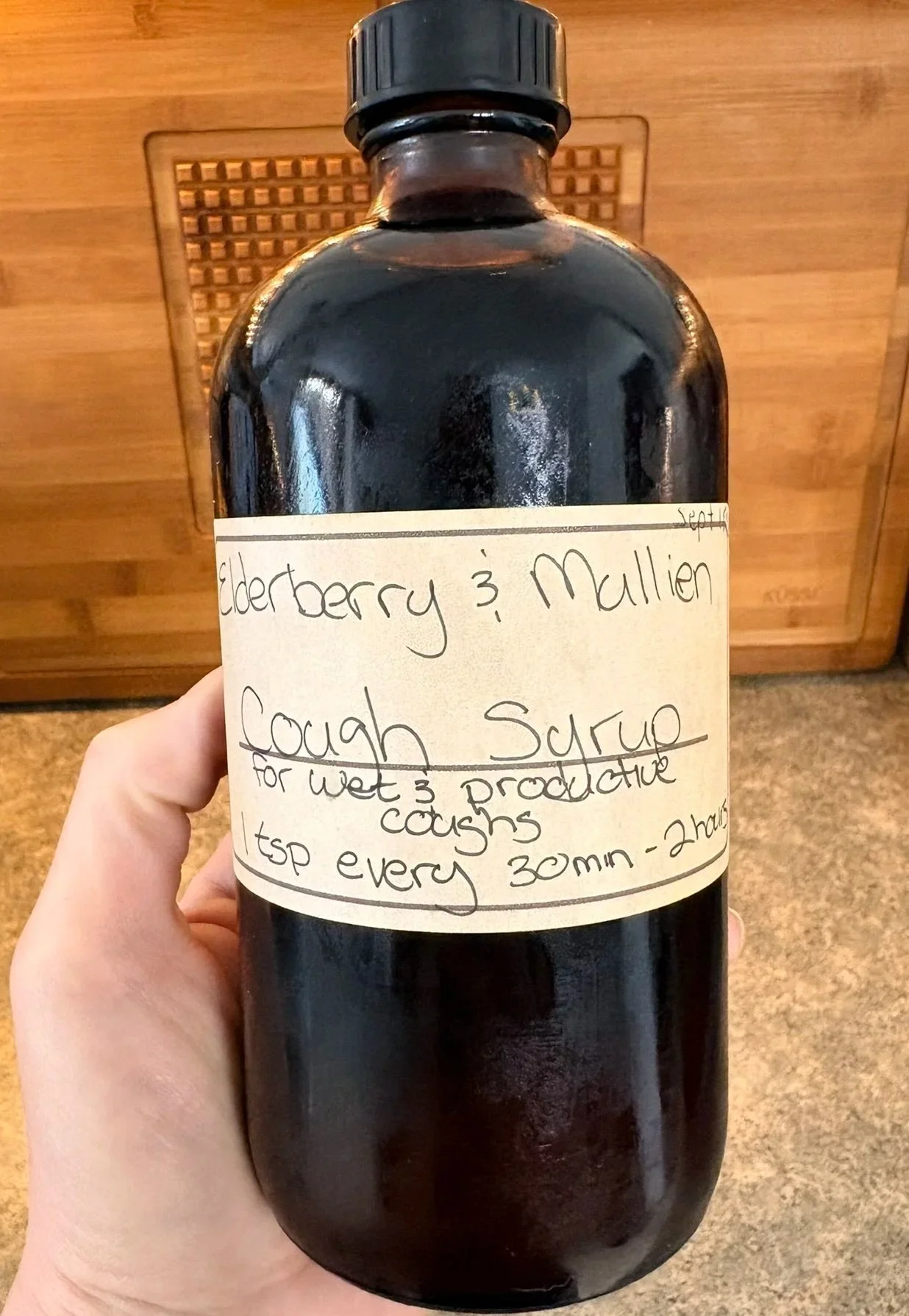
In this post we are going to be making a cough syrup you can reach for whenever you have a wet productive type cough that could use a bit more support
Mullein & Elderberry Cough Syrup for Wet Productive Coughs
This post may contain links but they are not affiliate links. I am not in any sort of affiliate program at this time. They are links to things I actually use. All formulations shared on this blog have been formulated for personal use only, not for resale.
I am not a Doctor & none of this is medical advice. It is here for entertainment & educational purposes only & it is up to you to talk to your health care practitioners first. The information shared is not intended as a substitute for professional advice. Always consult a qualified health care provider before making any health decisions
Today we are making a cough syrup for wet productive type coughs that not only tastes good, it actually works.
I do want to begin by saying that the point of this cough syrup is not to repress your urge to cough but rather help the body to actually expel the mucus or phlegm so you can start to feel better. Sometimes when we repress certain parts of an illness we actually encourage it to stay with us longer, so that’s just something to keep in mind
If you wanted to use the herbs in this syrup & instead turn them into a tea there will be instructions on how to do so in the recipe section below
Let’s talk about the herbal allies that are going into this syrup
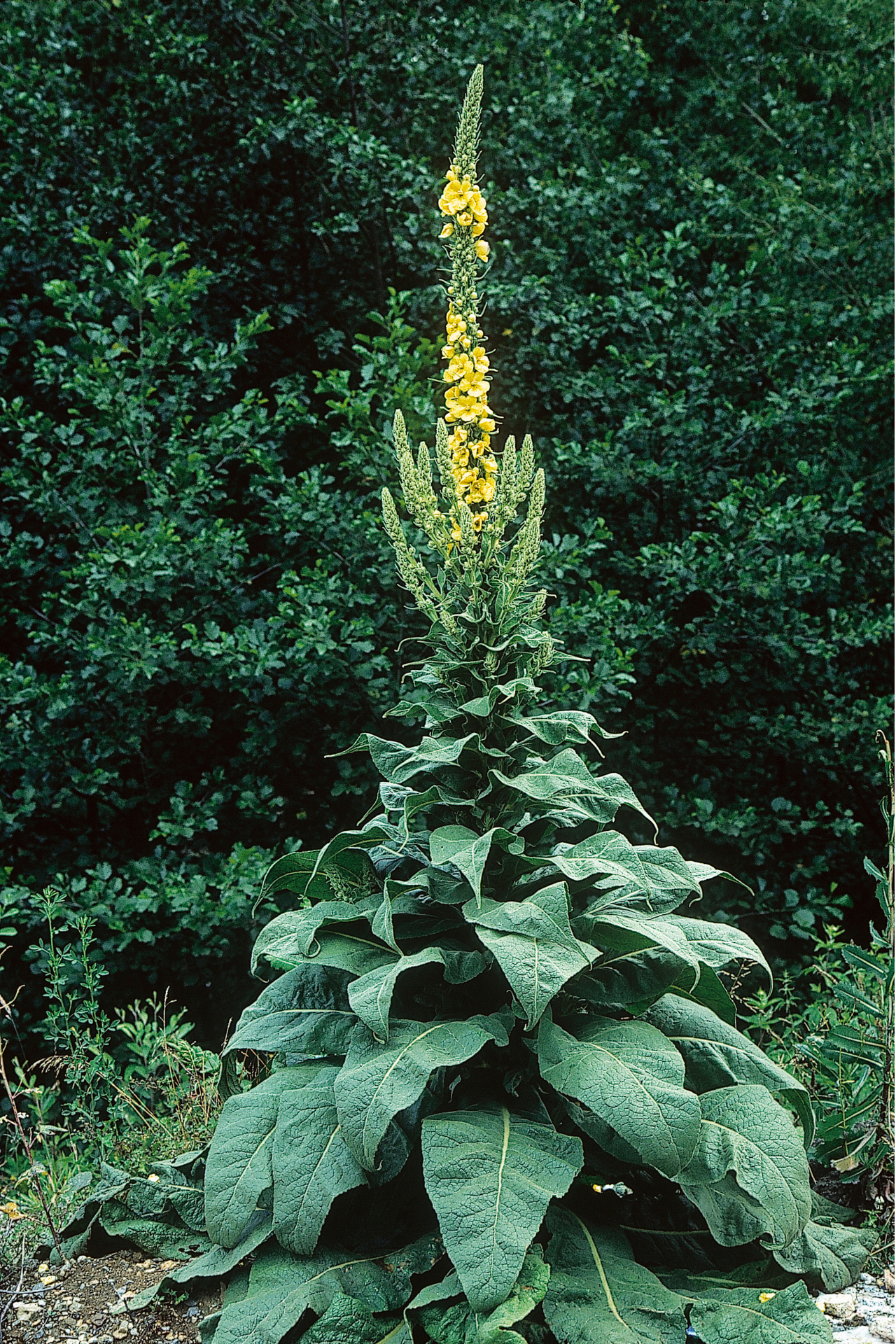
Mullein
Botanical name: Verbascum thapus
Common names: Mullein, Great Mullein, White Mullein, Mullein Dock, Aaron’s rod, Aaron’s staff, Our Lady’s Flannel, Velvet Dock, Candlewich plant, Lunkwort, Flannel, Beggar’s Blanket, Old Man’s Flannel, Hag’s Taper
Plant Family: Verbascaceae
Native to: Eurasia
Naturalized to: North America
Botanical Description: Mullein is a tall woody plant with a very stately stance. During its first year the plant shoots out a large grey-green rosette of thick leaves that are flannel-like. The leaves are oblong in shape with smooth edges & tiny hairs. It stays close to the ground with the leaves getting smaller the closer they get to the center. During the second year the plant sends up a strong sturdy stock from the center. It can reach heights of 10 feet but is typically 5-6 feet tall. The top of the stock produces light yellow flowers during mid summer that randomly open one at a time
Parts used: Leaves, flowers & roots can be used medicinally. The stock is sometimes used as a torch
Taste:
Bitter
Sweet
Astringent
Energetics:
Cooling
Moistening
Neutralizing
Herbal Actions of Concern:
Antimicrobial
Astringent
Demulcent
Expectorant
Inflammation modulating/ anti-inflammatory
Vulnerary
Check out this guide I wrote on herbal actions HERE
Indications for Use:
Inflammatory conditions of the respiratory system where things feel sore, inflamed or dry such as when experiencing a spasmodic or dry hacking cough, infections, sore throats & asthma
Skin healing wounds or burns
Systems Affected:
Lower respiratory system: working as a dual purpose respiratory remedy. It contains large quantities of mucilage which can exert a soothing & mucus producing effect that can calm irritated airways while also being able to stimulate the lining of the respiratory system helping produce effective & productive coughs.
Important To Note:
Mullein is derived from the Latin work mollis meaning soft or woolly
Always be sure to strain mullein preparations to ensure all the hairs off the leaves have been removed as they could potentially cause irritation
Makes an excellent remedy for ear infections or ear aches when you use an oil that has been infused with the flowers. Sometimes garlic is added.
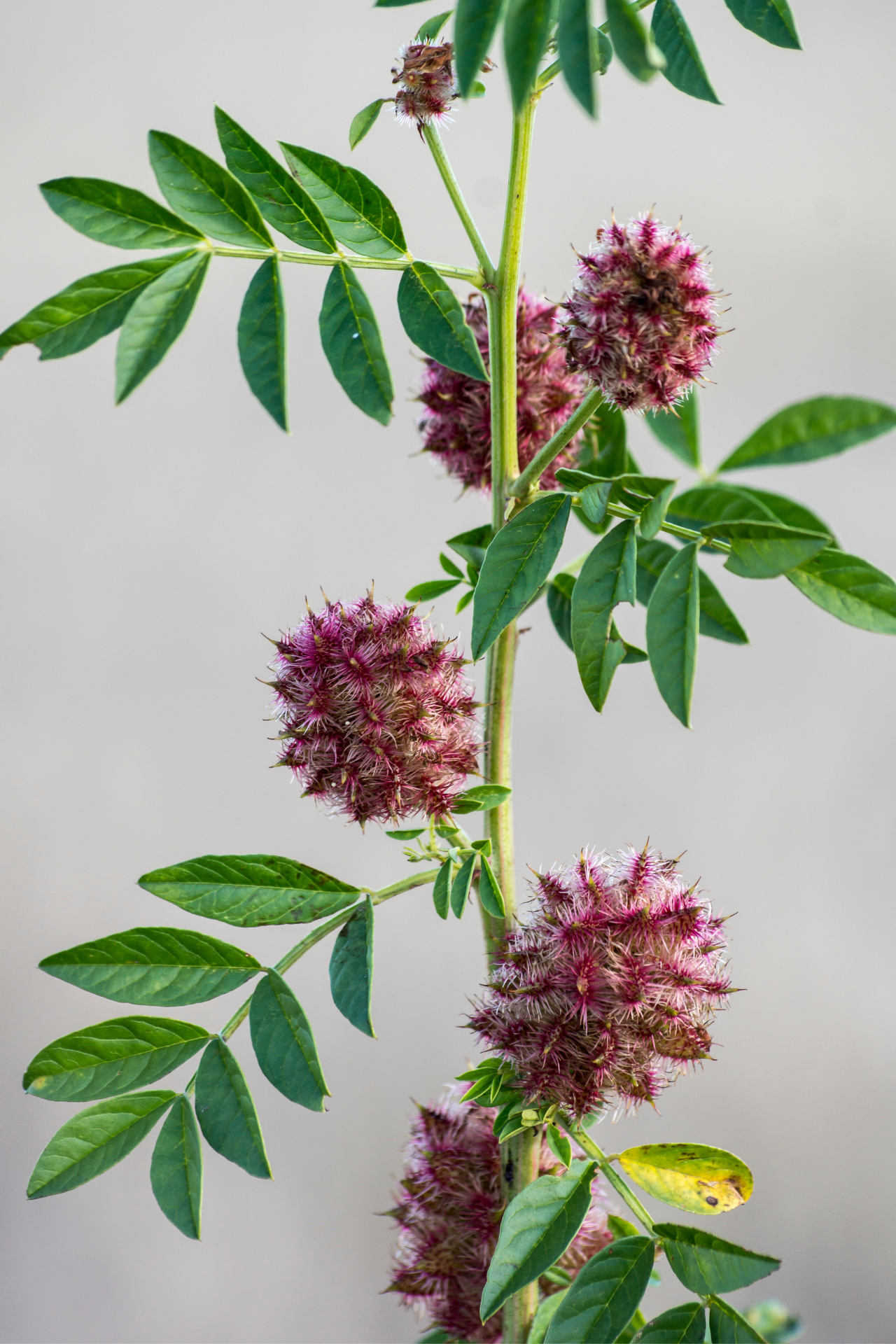
Licorice Root
Botanical name: Glycyrrhiza glabra
Common names: Licorice Root, Licorice, Sweet Root, Chinese Licorice
Plant Family: Fabaceae
Native to: Southern Europe
Naturalized to: Mediterranean & United States
Botanical Description: Licorice root is a hardy perennial that reaches 3-7 feet tall. It has small compound leaves with 4-8 leaflets that produce small purple flowers midsummer. Their roots are soft & bright yellow inside
Parts used: Root
Taste:
Sweet
Bitter
Energetics:
Cooling
Moistening
Herbal Actions of Concern:
Antioxidant
Antirheumatic
Antitussive
Expectorant
Immunomodulant
Inflammation modulating/anti-inflammatory
Indications for Use:
Coughs & sore throats
Infections with yellow or green phlegm
Gastritis
Systems Affected:
Respiratory system helping to loosen mucus helping with dry coughs or stuck phlegm, sore throat
Digestive system helping to relieve intestinal inflammation & spasm.
Important To Note:
At low doses it helps with nausea, at high doses it may induce vomiting
Has been used as a convalescing tonic in Europe
Consistent or excessive consumption may raise blood pressure
Use with caution in men that have a history of impotence or infertility as licorice has the ability to lower testosterone levels in the body
It may interact with certain medications & oral contraceptives
It is contraindicated in cases of hypertension, fluid retention, inflammatory liver disorders, severe obesity, congestive heart failure & renal disorders
Licorice root does not taste like licorice. Licorice root is nauseatingly sweet & is typically used in Traditional Chinese Medicine as a formulation harmonizer helping to improve the taste so the medicine will actually go down. The active constituent in licorice that is responsible for its sweet taste is 50 times sweeter than sucrose .
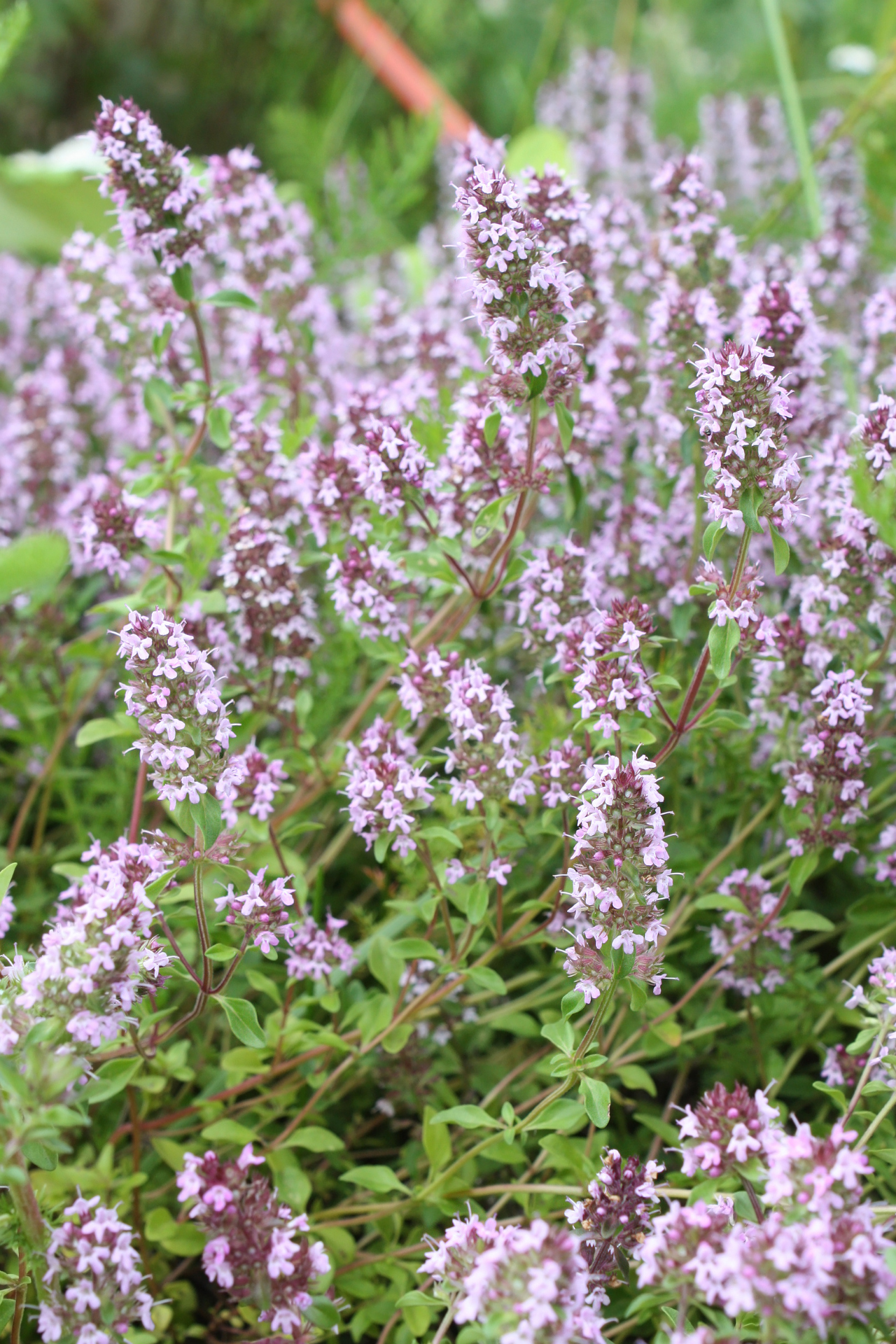
Thym
e
Botanical name: Thymus vulgaris
Common names: Thyme, Garden Thyme, Mother or Thyme, Red Thyme, Lemon Thyme
Plant Family: Lamiaceae
Native to: Mediterranean
Naturalized to: Eastern North America
Botanical Description: Thyme is a perennial woody fibrous root. It has many stems that are hard & round. This dense shrub forms flow spreading mounds with narrow greenish-gray leaves. The leaves are small & narrow with clusters of white, pink or light purple flowers at the top of the stems
Parts used: Leaves
Taste:
Pungent
Energetics:
Warming
Drying
Neutralizing
Herbal Actions of Concern:
Antimicrobial
Antioxidant
Antipyretic
Antiviral
Expectorant
Inflammation modulating/anti-inflammatory
Indications for Use:
Respiratory infections
Tightness in chest
Dry irritated coughs or when experiencing airway tightness or wheezing
Cold, damp or stagnant tissue states
Systems Affected:
Respiratory system helping to relieve spasm from excessive coughing
Immune system working as a powerful antibiotic, antifungal & antibacterial ally
Important To Note:
Use thyme as a steam to help reduce congestion
Learn more about our other two ingredients Elderberry & Cinnamon HERE
Mullein & Elderberry Cough Syrup for Wet Productive Coughs
While you are gathering your ingredients you will need to decide if you are planning on preserving this syrup or not. This syrup will only have a shelf life of about 3 days when stored in the refrigerator
To extend the shelf life I would suggest adding in ¼ cup of alcohol or a tincture for every 1 cup of syrup. It will still need to be stored in the refrigerator for optimum freshness with a shelf life of up to 1 year
Another option for storage is in ice cube trays where it should last for up to 6 months
Equipment:
Saucepan
Measuring cups & spoons
Stove, hotplate or kettle
Fine mesh strainer
Finely woven cheesecloth, muslin or an unbleached coffee filter
Storage bottle
Ingredients:
To make the syrup
¼ cup Mullein
¼ cup elderberry
2 TBSP licorice root
2.5 TBSP thyme
½ TBSP part cinnamon
2 cups Water
1 cup Honey
2 TBSP Lemon Juice
Preservation option: Add ¼ cup alcohol or tincture per 1 cup of syrup
Instructions:
Bring water & herbs to a boil in a pot
Turn off the heat & allow the herbs to steep, covered, for 20-30 minutes
Strain through a fine mesh strainer & unbleached coffee filter
Stir in honey, lemon juice & tinctures if you are using them
Place in desired storage container & label
Dosage:
1 tsp every 30 minutes to 2 hours
Shelf Life & Storage:
Up to 3 days in the refrigerator
Up to 1 year in the refrigerator when tinctures or alcohol are added
Freeze in ice cube trays for up to 6 months
Notes & Substitutions:
If you plan on using this syrup on a child under the age of 1 who can not safely consume honey use rice syrup in the same amount
Ingredients:
To make a tea blend
1 part Mullein
1 part Elderberry
¼ part Licorice Root
⅓ part Thyme
1/10 part Cinnamon
Instructions:
Blend all ingredients in a large mixing bowl until they are well combined.
Place in your desired storage container
Usage:
You can either make a hot water infusion (AKA cup of tea) or a decoction (AKA a concentrated herbal preparation)
Whichever preparation you make, be sure to strain the tea very well to ensure no little hairs off of the Mullein plant will cause any type of irritation. To strain mine I like to use a piece of tightly woven muslin or cheesecloth, an unbleached coffee filter will also work
To make tea:
Place 1-2 TBSP of herbs in a tea infuser
Pour just boiled water over top of the herbs
Cover the top of the cup with a saucer
Allow to steep for 15-20 minutes
Remove the tea infuser or strain well if you didn’t use one
Add a bit of honey or lemon if desired
To make a decoction:
Place 1-2 TBSP of herb into a sauce pan
Add 1-2 cups of water over top of the herbs
Cover the pot
Bring the mixture to a boil & reduce the heat so it simmers for 20-45 minutes. If you are doing a longer decoction be sure to monitor the water levels so you don’t lose too much. We want it to be concentrated, we don’t want it to lose all the water
Strain the mixture well
Add a bit of honey or lemon if desired
Store any unused decoction in the refrigerator & use within 1-2 days
Comment down below & let me know what is your favorite herbal ally to lean on when you start to feel under the weather?
Until next time, may you find Peace wherever you are!
Watch the video & tutorial HERE

Image of linked YouTube thumbnail