
Herbal Bath Salt Blend for Colds, Flus & Achy Muscles
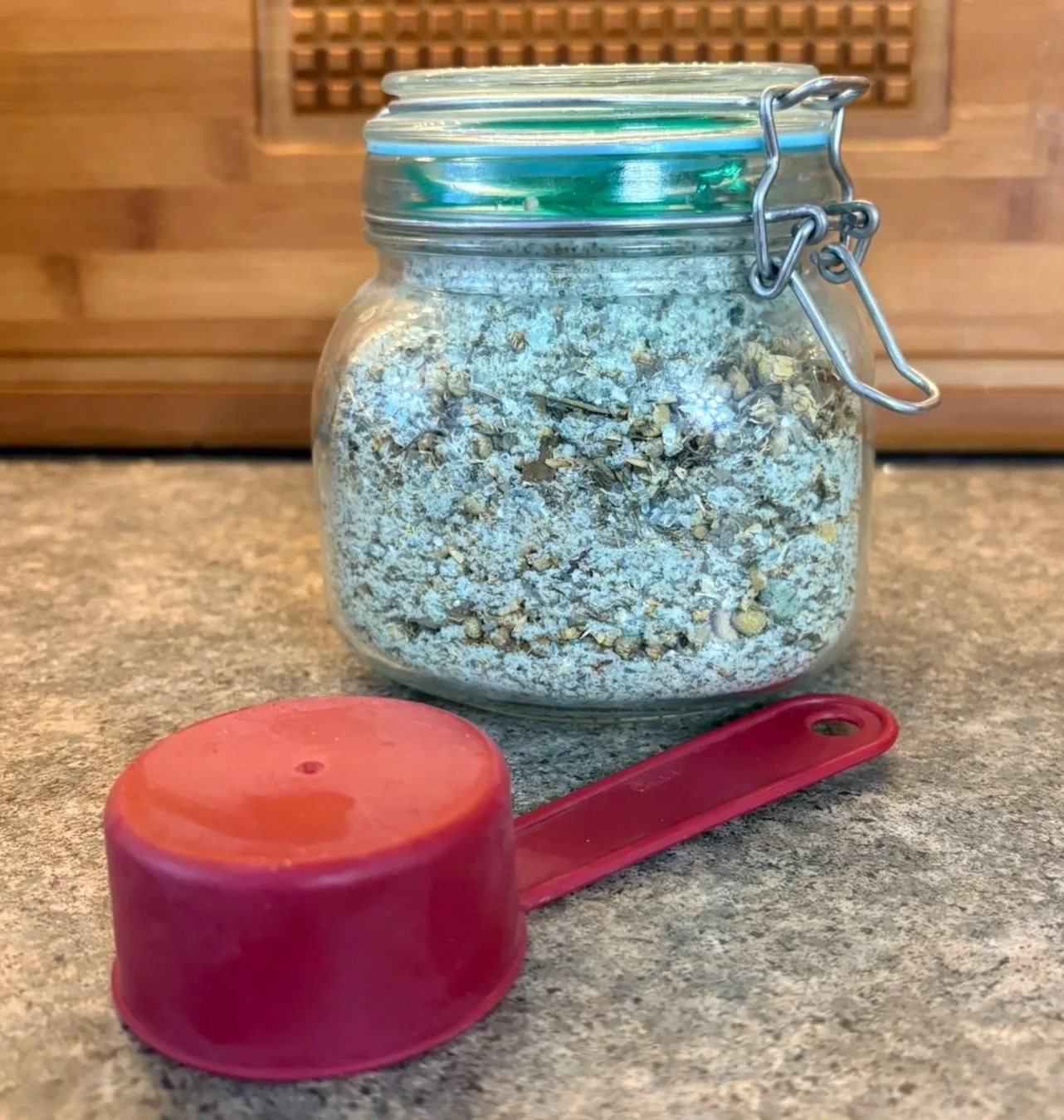
In this post we are going to be making bath salts that can help support the body during the aches & pains of a flu
This preparation is a good addition to your cold & flu arsenal!
Herbal Bath Salt Blend
This post may contain links but they are not affiliate links. I am not in any sort of affiliate program at this time. They are links to things I actually use. All formulations shared on this blog have been formulated for personal use only, not for resale.
I am not a Doctor & none of this is medical advice. It is here for entertainment & educational purposes only & it is up to you to talk to your health care practitioners first. The information shared is not intended as a substitute for professional advice. Always consult a qualified health care provider before making any health decisions
Today we’re going to mix up a batch of my favorite bath salts. These salts help relieve aches & pains while providing a sense of relaxation, or at least that’s what I notice whenever I use them
This blend uses a combination of Epson salt & baking soda but magnesium flakes would make a good addition as well
The herbal allies chosen to go into this formulation are dried Peppermint Leaves, Chamomile Flowers & Ginger Root
I have already spoken about Ginger Root in this post
I will be covering peppermint in a post next week when I share a flu fighter glycerite recipe
Today let’s talk about Chamomile
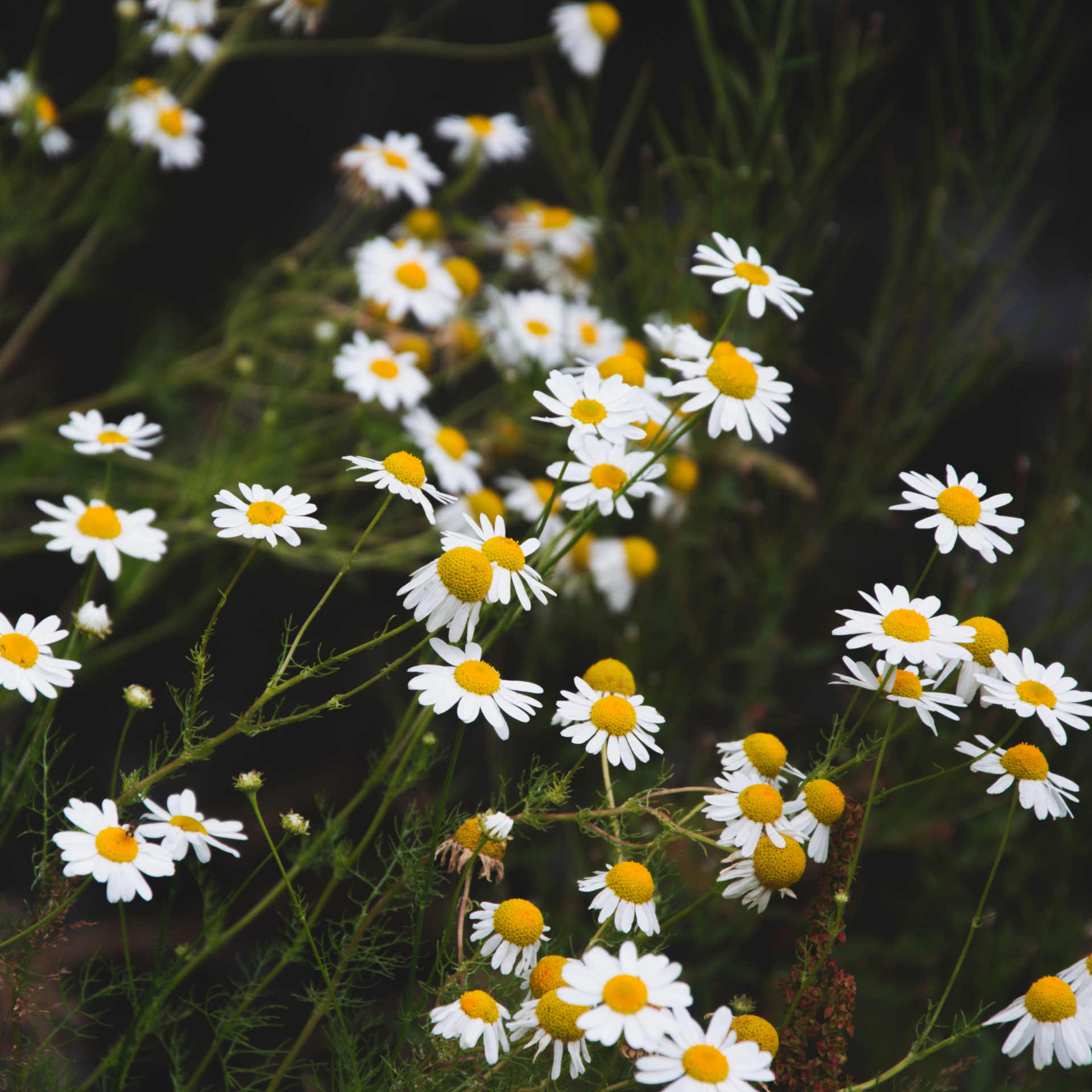
Chamomile
Botanical name: Matricaria chamomila
Common names: Manzanilla, Roman Chamomile, German Chamomile
Plant Family: Asteraceae
Native to: Asia & Europe
Naturalized to: North America
Botanical Description: Chamomile has long smooth stems that grow between 6-23 inches long. The long, narrow, feather-like formation of the leaves usually has 2-3 branches from one stem. There are many flower heads to one branch or stem. The flower petals are white with a yellow head in the center. The flowers bloom early to mid-summer & have a very aromatic scent
Parts used: Flowering tops
Taste:
Bitter
Aromatic telling us it has a high volatile or essential oil content
Energetics:
Cooling
Drying
Herbal Actions of Concern:
Analgesic
Antiemetic
Antimicrobial
Antioxidant
Antispasmotic/spasmolytic
Diaphoretic
Inflammation modulating
Nervine
Relaxant
Sedative
Indications for Use:
Anxiety
Irritation
Digestive discomfort
Systems Affected:
Nervous system: working as a nervine, relaxant & mild sedative that can help with restlessness, anxiety, irritability & insomnia. It interacts with our GABA-A receptors in the central nervous system helping to bring a sense of calm while offering anti-anxiety affects
Digestive system: helping to relieve digestive spasm, bloating, cramping, indigestion & colic through its antispasmodic action. It helps to inhibit smooth muscle contraction which helps relax tissues & relieve tension.
Respiratory system: when inhaled as a steam it can help in cases of sinusitis, chronic asthma, bronchitis, hayfever & influenza by helping to clear excessive mucus & phlegm from the lungs while reducing inflammation & muscular tension
Important To Note:
When applied topically it can help sooth skin inflamation & aid in the healing of wounds
Talk to your health care professionals if you are taking any medication that is used to depress the central nervous system such as alcohol, benzodiazepines or opioids as adverse reactions may occur. Although unlikely there is still a risk
We are going to be adding some essential oils into the salts as well. I will be sharing my favorite blend, but you could easily switch them out to ones you prefer
Eucalyptus
Botanical name: Eucalyptus globulus
Plant family: Myrtaceae
Therapeutic benefits: analgesic, antiviral, antispasmodic
Supports with: opening airways, congestion, aches & pains
Dermal max: 20%
Safety precautions:
Keep away from infants & young children faces
Lavender
Botanical name: Lavandula angustifolia
Plant family: Lamiaceae
Therapeutic benefits: anti-depressant, anxiolytic, sedative, diuretic, analgesic
Supports with: insomnia, restlessness, anxiety
Dermal max: N/A
Safety precautions: none known
Peppermint
Botanical name: Mentha X piperita
Plant family: Lamiaceae
Therapeutic benefits: analgesic, decongestant, stimulant, diaphoretic
Supports with: aches & pains, congestion, cooling, calms muscle spasm, cools down body temperature
Dermal max: 5.4%
Safety precautions:
Avoid use around children’s faces
Use with caution for an asthmatic flare
Tea Tree
Botanical name: Melaleuca alternifolia
Plant family: Myrtaceae
Therapeutic benefits: analgesic, antifungal, antimicrobial
Supports with: coughs, rhinitis, infections
Dermal max: 15%
Safety precautions:
Never use undiluted on the skin
If you are planning on using this blend on a child it may be a good idea to use half the recommended amount of essential oils just to ensure you don’t open the airways too much causing some discomfort
Herbal Bath Salt Blend
If you do not have a piece of the recommended equipment but have something that would work in its place go ahead & use what you have
Recommended Equipment:
Quart sized jar with lid
Mixing bowl
Digital scale
Whisk
Ingredients:
350 grams Epson Salt
300 grams Baking Soda
30 grams Peppermint Leaves, dried
30 grams Chamomile Flowers, dried
15 grams Ginger, dried & powdered
5 grams Carrier Oil
15 drops Peppermint Essential Oil
10 drops Eucalyptus Essential Oil
10 drops Lavender Essential Oil
8 drops Tea Tree Essential Oil
Mica, optional
Instructions:
Place the salt, baking soda & herbs in a large mixing bowl, whisking well to combine
Add mica or a colorant if desired until preferred color is reached.
In a small bowl mix together the carrier oil with the essential oils, mixing well to combine
Pour the oil blend into the mixing bowl & whisk well to thoroughly combine
Place in a clean jar & use as required
Usage:
Add ¼ cup of bath salts directly into a warm bath tub or into a small muslin bag placed under the faucet
Soak in the tub for at least 15 minutes
Repeat up to 3 times per day
Shelf Life & Storage:
Up to 1 year in an airtight storage container
Keep out of direct sunlight
Notes & Substitutions:
Feel free to switch out your herbs
Use all one herb instead of a combination
Always use common sense, if you have an allergy or a suspected allergy to any herbs omit them
Do not use ginger in your blend if there is a possibility of a pregnant person using it. There are some risks with ginger as it may increase the risk of bleeding or miscarriage as it has some emmenagogue properties. Ginger is traditionally used to help promote menstrual flow by increasing pelvic circulation
Comment down below & let me know What EO do you like to reach for when you're feeling under the weather?
Until next time, may you find Peace wherever you are!
Watch the video & tutorial HERE
Image of linked YouTube thumbnail