
Kombucha From a SCOBY & Starter Tea
If you’ve ever wanted to hop on the kombucha train this is the post for you!
Let’s begin by talking about what a SCOBY is
SCOBY stands for Symbiotic Culture Of Bacteria & Yeast which is required for this fermentation process. Kiefer grains are another example of a SCOBY
Another word for a SCOBY is Pellicle. A pellicle is basically a skin of proteins & cellulose that forms during the fermentation process
You can use the words SCOBY & Pellicle interchangeably but they are slightly different as you can see. All pellicles are SCOBYs but not all SCOBYs are pellicles
You will also need some tea, green tea or black tea is recommended. Both teas actually come from the same plant Camellia Sinensis AKA the Tea Plant or Tea Tree. This is not to be confused with Melaleuca alternifolia that most of us know as tea tree
While you can technically make kombucha with other types of tea but this is a good place to start. We can't run until we learn to crawl.
Equipment:
1 gallon glass jar you plan on using for a brewing vessel
Small pot or kettle
Tea press or tea pot
Funnel
Thermometer
pH Meter or strips
Breathable cover
Ingredients:
1 cup Organic Cane Sugar
6-8 tsp OR 6-8 tea bags Black or Green tea
1 gallon Filtered Water
1 SCOBY
1 cup starter tea
Instructions:
Heat 1 quart (4 cups) of water to almost a boil
Add your tea to a tea pot or tea press & allow to steep for 5-15 minutes
Pour the tea into your brewing vessel
Add 1 cup of sugar & stir until dissolved
Add the rest of the water making sure that the overall temperature in your jar is between 75-85F. Be sure to leave about 3” of headspace
Test the pH of your starter tea, it should be below 4.5 to ensure safety. If it is not below 4.5 you will need to add some distilled white vinegar, 1 TBSP at a time until it is below the proper pH
Place a breathable cover on your brewing vessel
Allow the jar to sit in a warm place that is between 75-85F, has plenty of air flow & is out of direct sunlight. When my kitchen gets a bit too cold I like to wrap my jar in some tea towels to keep it warm. A small string of Christmas lights wrapped around the jar would also work. If the kombucha is below 75F fermentation is going to take longer. If its above 85F it may go too fast
Ferment for 7-21 days. Taste your kombucha after the 7th day & see if you like the flavor. The longer you leave it the stronger & more sour it’s going to be
After a few days you’re going to notice a new pellicle
Once your desired flavor is reached it’s time to do the second fermentation where we can add some flavor & build carbonation
Using mason jar or swing top bottles add your plain kombucha.
Allow your kombucha to ferment a second time for 1-3 days then place the bottles in the fridge for 24 hours before opening them
Consume within 3-4 days for best flavor
Make sure you are reserving at least 1 cup of starter tea for your next batch.
If you are not brewing the next batch right away store your starter tea in the cupboard, never the fridge. Set aside 2 cups so can still feed your SCOBY when you’re not brewing it. Place your SCOBY in a clean jar with a bit of starter tea & store in the cupboard until you are ready to use it creating a SCOBY hotel. Be sure to feed the SCOBY some starter tea to keep it healthy
Since I use a continuous brewing vessel I always make sure to leave 1/3 in the bottom of my jar to ensure I have enough to get the next batch going
Notes:
Check out Amazon for brewing kits that has all of the pieces of equipment
If you want to make a continuous brew be sure to find a brewing vessel that has a stainless steel spigot, plastic will not work as it will break down. Amazon also sells the metal spigots if needed
If you have a friend who brews kombucha ask them for some SCOBY & starter tea or you can source them online online
Swing top bottles work the best to build carbonation but mason jars will work in a pinch, it just won’t be as fizzy
Kombucha will eventually turn to vinegar if left long enough
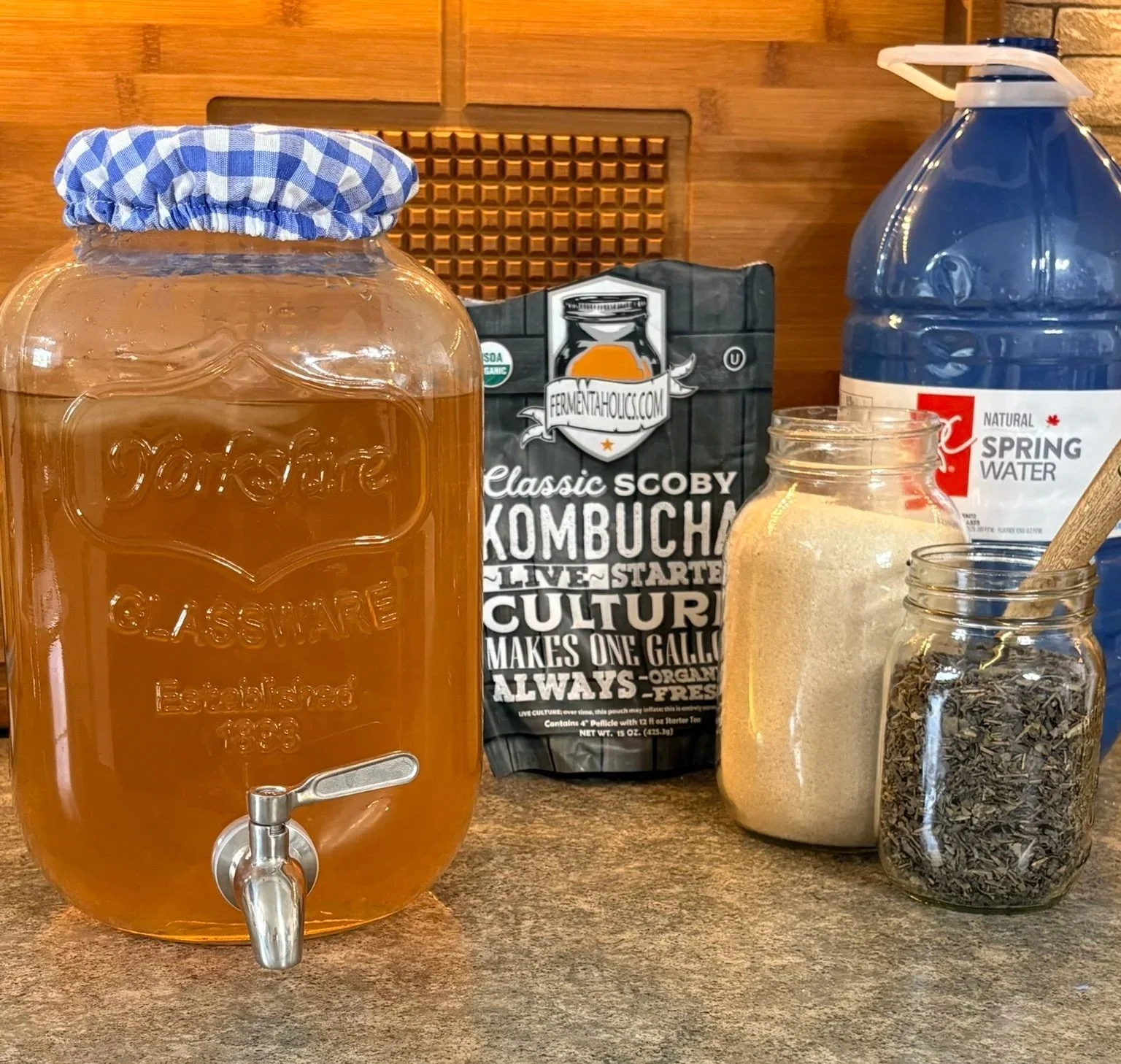
Image of continuous kombucha brewing vessel in front of the Kombucha starter kit, jar of cane sugar, jar of green tea in front of a bottle of spring water