
The Right Way to Brew Medicinal Tea
In this post we are going to be talking about the right & wrong way to brew a medicinal cup of tea
Don’t worry I’ll be sharing the one little step that I certainly was not consitently following & bet you’re skipping it too!
The Right Way to Brew Medicinal Tea
This post may contain links but they are not affiliate links. I am not in any sort of affiliate program at this time. They are links to things I actually use. All formulations shared on this blog have been formulated for personal use only, not for resale.
I am not a Doctor & none of this is medical advice. It is here for entertainment & educational purposes only & it is up to you to talk to your health care practitioners first. The information shared is not intended as a substitute for professional advice. Always consult a qualified health care provider before making any health decisions
Today we’re going to be talking about the difference between a cup of tea for enjoyment & a cup of tea geared towards medicinal or even therapeutic purposes
I’ll touch on a few of the different types of infusions you can make. In a future post I will be teaching you about dosage as well as how to formulate your own medicinal tea blends
So when it comes to tea for pleasure & tea for health support there’s an old adage that nicely sums this up: “the poison is in the dose” or another way to say this would be “the dose makes the poison”
There is a lot that could be said about that statement but to me it feels pretty clear. Even herbs that we deem to be dangerous & deadly when used under the right conditions for the right constitution for the right ailment can truly cause miracles
This would mean that teas for pleasure would contain less herbs. Medicinal strength cups of tea don’t always taste as pleasurable as your evening cup of Chamomile, but sometimes they can & do.
There is both an art & a science when it comes to making medicinal teas. For example we can get really technical & specific with our water temperature as that can alter the flavor & some of the effects of our medicinal infusions. Different temperature can extract different herbal constituents of our plants & some plants actually do better as hot infusions while others should be enjoyed medicinally as cold infusions
Hot vs Cold Infusions
Herbs for hot water infusions: leaves, flowers, aerial parts of the plant, stems & aromatic herbs. They can be made even stronger with longer stepping times
The herbs are steeped for 20 minutes to a few hours. The longer they steep the more bitter the tea will become but the more medicinal properties are extracted into your cup. Many of our powerful medicinal herbs can be quite bitter but remember while the bitter flavor is not something most of us are accustomed to that does not mean it’s not important. I know certain people that swear by buckleys who’s entire advertising campaign was: it tastes awful but it works. What if you started to look at herbal medicines in the same way?
While some herbal preparations can taste quite pleasant, let’s not be so quick to judge a cup of tea just by its flavor as we might be missing out on some really helpful & powerful healing benefits if we could just get over the taste. Remember a bit of honey or the addition of certain herbs like licorice root, that happens to be nauseatingly sweet can do wonders in your cup
Herbs for cold water infusions: mucilate containing plants, plants with many volatile or essential oils & plants that are mineral rich
When making a cold infusion simply put your herbs in a mason jar, tea pot with strainer basket or tea press, cover the herbs with cold or room temperature water & place in the refrigerator for 5-24 hours before straining & enjoying. Unused tea can sit in the refrigerator for 2-3 days
Decoctions
Another method of infusion for medicinal teas is the decoction method.
Herbs for decoctions: roots, barks, seeds, rhizomes & woods of a plant.
To make a decoction add the herbs to a saucepan & cover with water. BRing the water up to a boil, reduce the heat & simmer for 15-30 minutes. Remove from the heat & allow the herbs to steep for up to 1 hour covered.
If your herbal recipe has parts that need to be decocted (roots, barks, seeds) & other parts do best infused (leaves, petals & aromatic herbs) you can approach this 2 different ways
Make your decoction first & then add the herbs that need to be steeped
Do the entire thing as an infusion knowing that certain harder parts might not be extracted as effectively as cold parts. It’s better to not get all plant constituents rather than damaging the delicate ones. It is the volatile oils that really contain many of our medicinal benefits but they are the parts that are most delicate & sensitive to heat
Medicinal herbs that work better as cold infusion:
Marshmallow Root, Althaea officinalis
Sarsparilla, Simlax ornata
Peppermint, Mentha x piperita
Lemon Balm, Melissa officinalis
Rose, Rosa spp.
Roman Chamomile, Chamaemelum nobile
If you want to do a fun exercise pick one of the herbs & make a hot infusion & a cold infusion. Drink the tea & see if you can find the differences
The Right Way to Brew Medicinal Tea
There are a few different types of brewing vessels when it comes to making medicinal teas
Saucepan with lid
Tea press
Tea pot & lid with or without strainer basket
Tea balls, with a saucer on top of the cup
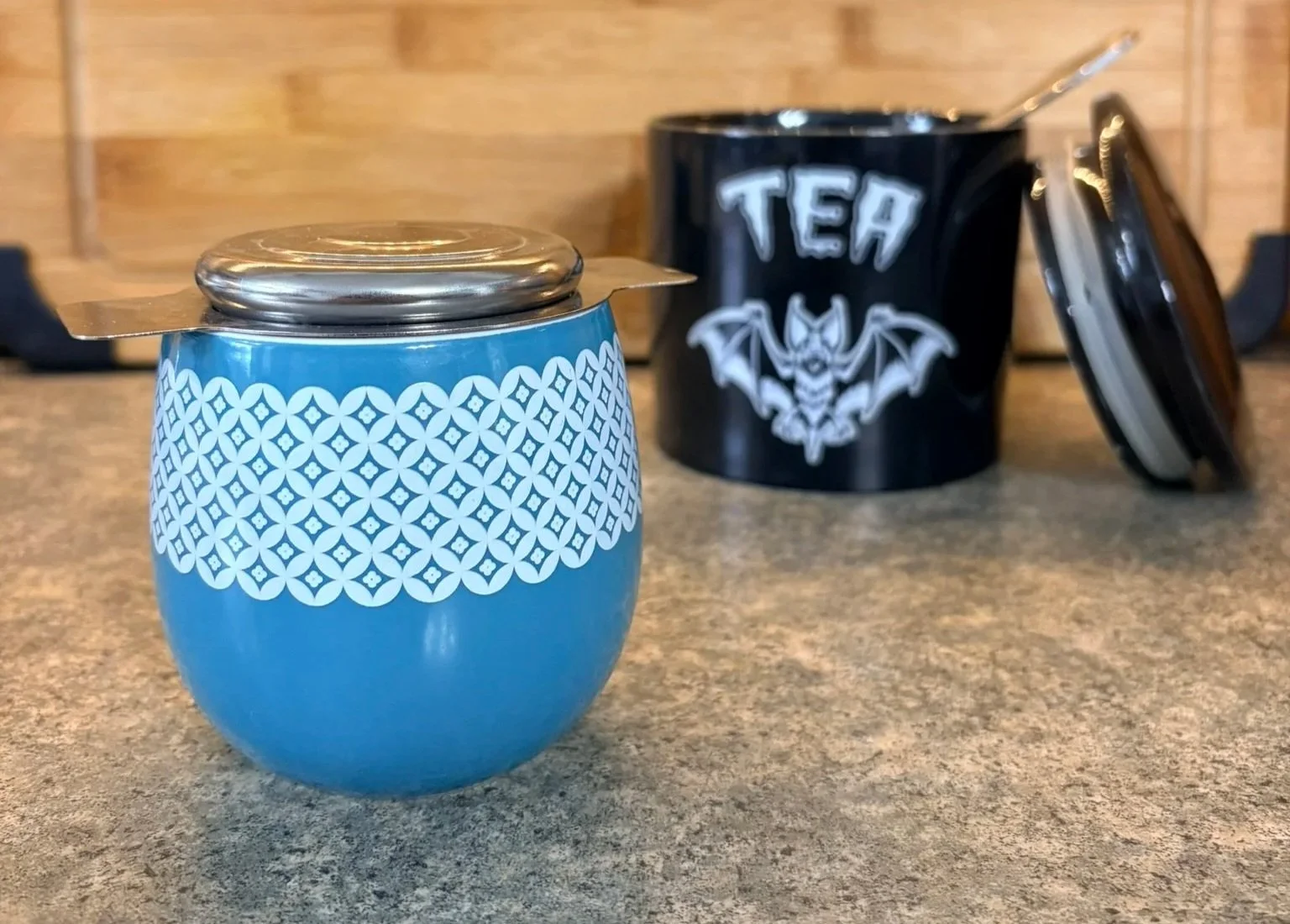
Tea strainer with a lid
Mason jar with or without a strainer basket. A cold brew set up works really well
These are not all the options available but they are the ones people will generally reach for, I suggest use what you have available
So while it really does not matter which brewing vessel or piece of equipment you use what is important is that you keep the tea covered as it does its extraction/infusion
For years I was making my medicinal cups of tea wrong simply by not putting a lid or a saucer over top of my cup as it steeped. By failing to cover the top of the cup I was allowing the volatile oils to evaporate into the air instead of staying in the cups so I could actually use their medicinal benefits
So when I say there is a right & a wrong way to make medicinal teas this is the piece many of us are actually missing
To Make A Medicinal Cup of Tea:
Place your 1-3 tsp of tea into your preferred brewing vessel. For a smaller amount of tea use a tea cup with a tea ball or strainer. For a large amount of tea use 1-3 TBSP of tea in your tea pot, tea press or large mason jar
Pour your just boiled water, room temperature water or cold water over top of the herbs. If you have a few different herbs in one blend that like hot or cold water I would suggest meeting them in the middle with a room temperature or luke warm water
Using a lid, plate or saucer, cover your tea as it steeps for 15-30 minutes
Strain the herbs & store any unused tea in the refrigerator for 2-3 days. While your tea will probably still be safe to drink after 3 days, as long as there are no signs of spoilage, but the medicinal effects will start to deteriorate after 3 days
Dosage:
This can be a very complicated concept that I will go into greater detail in a future post.
All recommended herbal dosages are based on a 150 pound person. This means if you are a very large adult you would need more & if you are a small child you would need less.
It is also very important to take into consideration any herbal preparation that will be given to a person who is nursing as any medicine will be passed along through the milk. This is actually the way we give medicinal medicines to infants, the mother drinks the herbal preparation, feeds the child & the child gets the medicine via the milk.
Medicinal Tea Dosage vs Therapeutic Tea Dosage
Medicinal teas → 1-3 cups per day spaced out evenly if required
A good example of a medicinal tea would be my digestive tea blend, where you would only need maybe 1 cup after a meal that caused you digestive distress. A nice big cup of Nettles, Urtica dioica, to start your day could be considered a medicinal cup of tea
Therapeutic teas → 3-4 cups per day spaced out evenly if required
A good example of a therapeutic tea would be my cold care tea blend, where large amounts of the tea over a short period of time would provide you a large amount of the medicine. Be sure if you are using a therapeutic amount of tea that you are doing so with herbs that are safe to use in large amounts, this is not something I recommend with low dose herbs. Or at the very least under the recommendations of a trained herbalist
Examples of low dose herbs:
Arnica, Arnica montana
Lobelia, lobelia inflata
Foxglove, Digitalis purpurea
Lilly of the Valley, Convallaria majalis
Belladonna, Atropa belladonna
Comment down below & let me know what is your favorite medicinal tea blend you like to reach for?
Until next time, may you find Peace wherever you are!
Watch the video & tutorial HERE
Image of linked YouTube thumbnail