
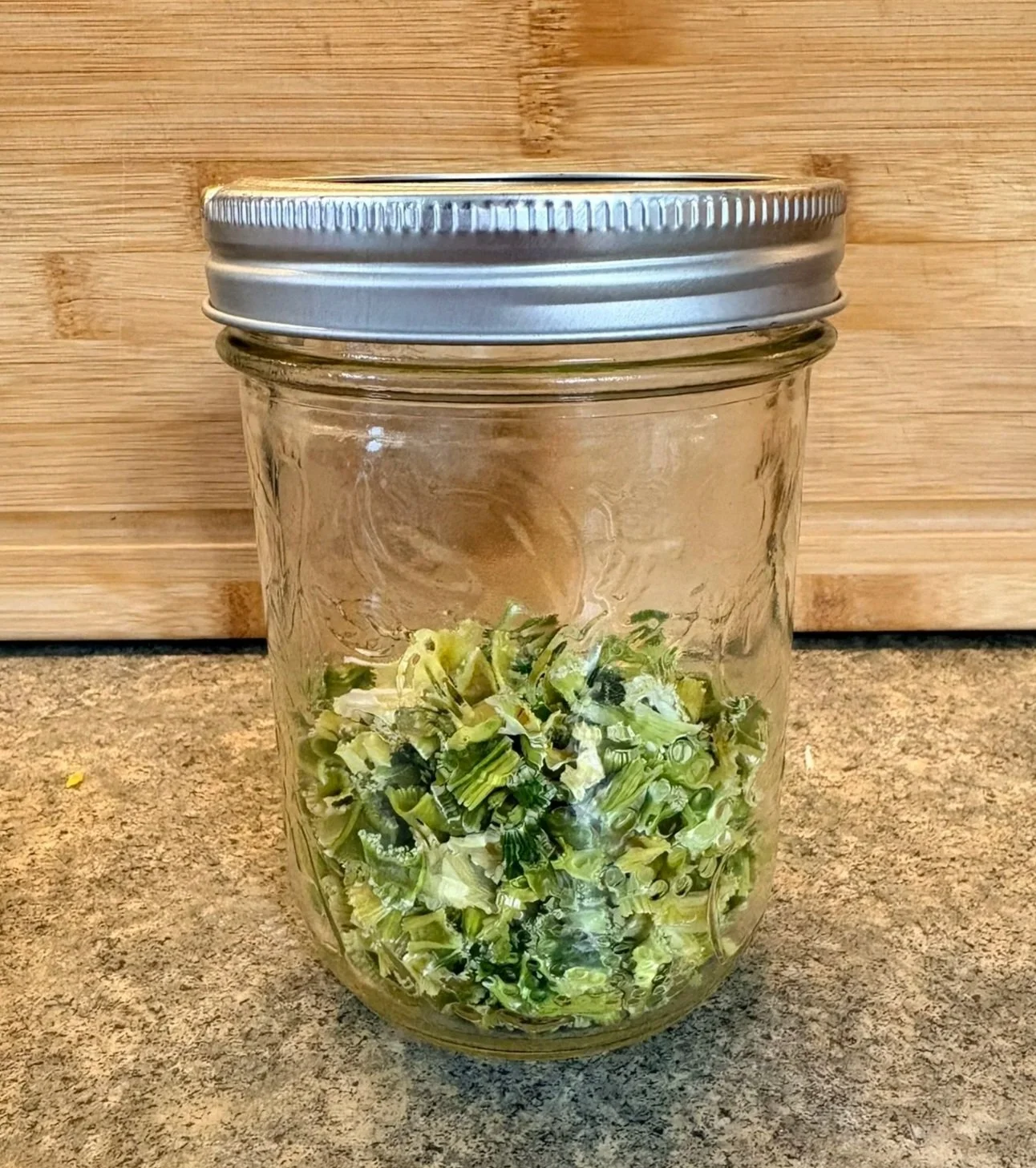
In this post we are going to be walking through the 10 steps for dehydrating celery
Dehydrating Celery & Celeriac Root
This post may contain links but they are not affiliate links. I am not in any sort of affiliate program at this time. They are links to things I actually use. All formulations shared on this blog have been formulated for personal use only, not for resale.
I am not a Doctor & none of this is medical advice. It is here for entertainment & educational purposes only & it is up to you to talk to your health care practitioners first. The information shared is not intended as a substitute for professional advice. Always consult a qualified health care provider before making any health decisions
Today we’re dehydrating celery for long term storage options. In future posts I will also be sharing different recipes using the dried foods, this celery is slated to be in my dehydrated mirepoix mix I’ll be sharing shortly.
2 large ribs of celery = 1 cup fresh celery = ⅓ -¼ cup dried celery = 1 TBSP celery powder
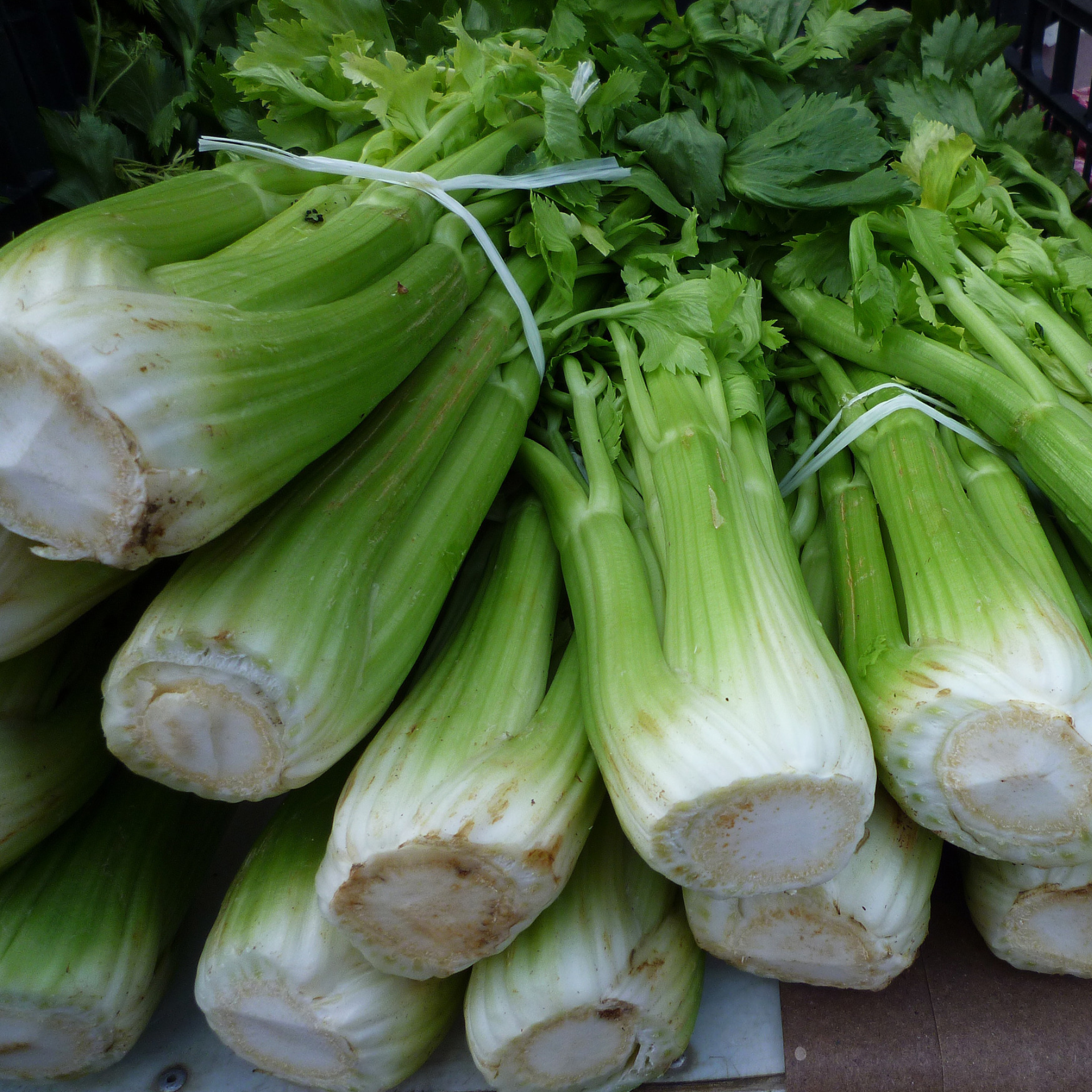
Image of some bunches of celery ready for the grocery store
If you keep the leaves from the celery stalks you could also dehydrate those to make celery salt, as a garnish substituting parsley or really in any way your heart desires. I’ll include a recipe for celery salt at the end of this post.
This particular method works for celery as well as celeriac or celery root. If you plan on dehydrating celeriac root you will need to add an additional step before blanching as you will need to peel the root first
Some potential uses for your dehydrated celery could be:
Casseroles
Salads
Sandwiches
Soups
Stews
Stir-fries
Before you use your dehydrated celery in a recipe you will most likely need to rehydrate it.
For dry preparations like salads or sandwiches use half the volume of water to food. This method works well with a cold soak by simply soaking the celery or celeriac root in cold water for 20-90 minutes on the counter or in the refrigerator overnight
For wet preparations like soups or stews use twice the amount of water to food. This method works well with a hot soak by pouring hot liquid over top of the dehydrated celery or celeriac, cover & allow to stand for 10-20 minutes. If you use this method be sure to reserve any left over soaking liquid & use that in your recipe
You can play around with temperature of water as well & that can help speed up the process
One important thing to keep in mind is you started with raw celery that was only blanched or parboiled which means that when it is rehydrated the celery or celeriac is going to still raw & depending on your intended usage will need to be cooked
Enough talk, now it’s time to dehydrate
Dehydrating Celery & Celeriac Root
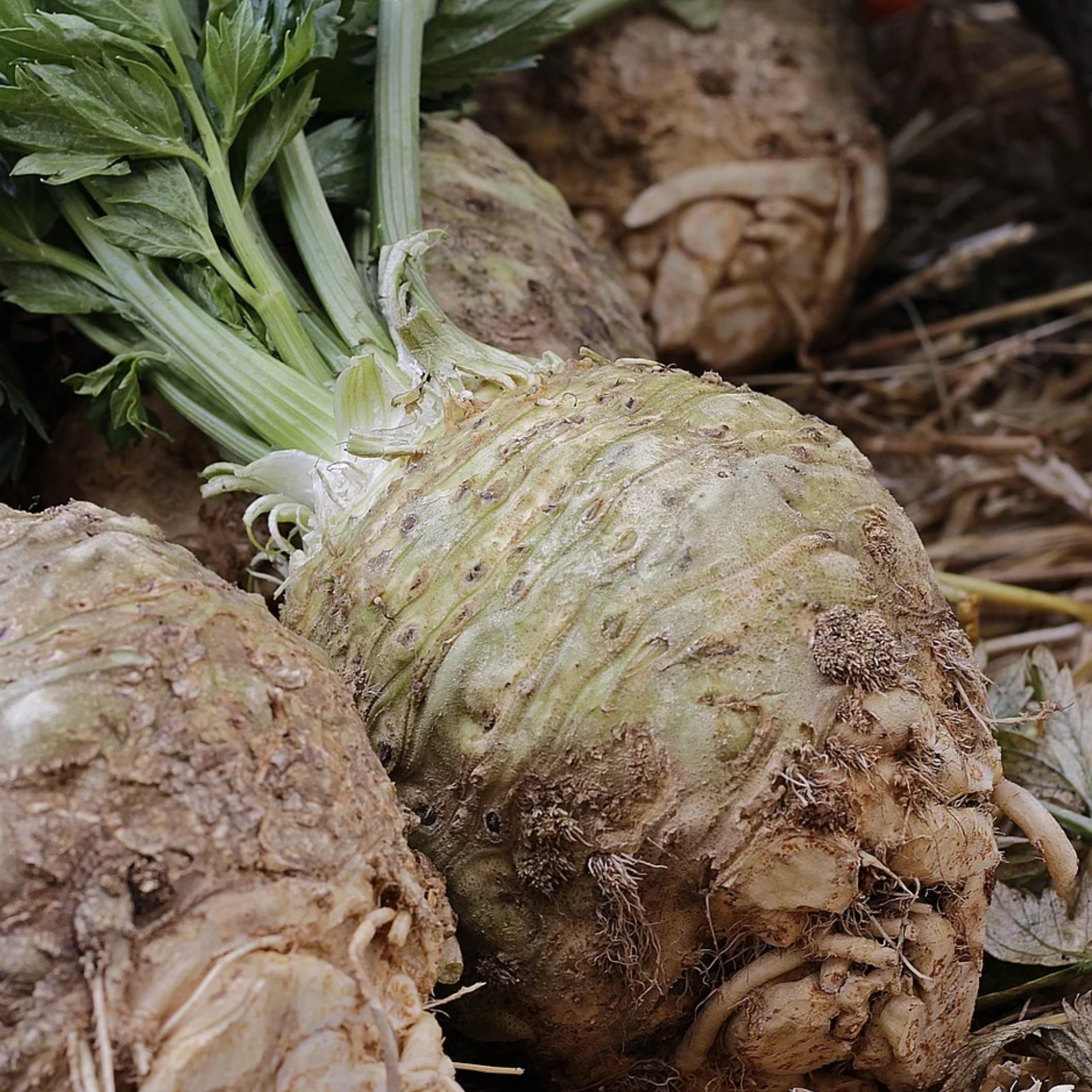
Image of celeriac root after harvest
Recommended Equipment:
Food dehydrator
Knife
Cutting board
Pot
Bowl
Paper towel
Ingredients:
Celery or Celeriac root
Water
Ice
Instructions:
Separate the stalks. If you have particularly stringy celery you could peel off the outer layer with a vegetable peeler which will help create a better texture. Be sure to remove the celery leaves & dehydrate them separately as they will require a different dehydration temperature & time. If you are dehydrating celeriac root peel the tough skin off first
Wash your celery or celeriac root. Rinse off any dirt or debris
Cut the celery or celeriac root. Trim off the ends & tops of each stalk & then slice it into ¼”-½” slices. Dice up the celeriac root into small pieces
Blanch the celery or celeriac root for 4 minutes.
Place the celery or celeriac root in an ice bath to stop the cooking process
Dry the celery or celeriac root. Place the pieces of celery or celeriac on a cutting board lined with a paper towel. Blot the celery or celeriac root until mostly dry
Place the celery or celeriac root in a thin layer on your dehydrator. Process for 4-10 hours at 125-135F. You can not over dehydrate a food so if you end up leaving it in the dehydrator longer it will be ok. If you aren’t comfortable running your dehydrator at night you can always turn it off when it’s time to go to bed & turn it right back on when you get up in the morning
Check for dryness. Allow the celery or celeriac root to cool for about 5 minutes before testing for dryness. There are 2 ways we can test celery & celeriac root
Plinking → drop a few pieces on a hard surface, like your countertop or on a dinner plate. If you hear a light weight plink sound, like if you dropped a piece of dried pasta on the countertop. If you hear a “plop” sound that means it’s not quite dry yet & needs more time in the dehydrator
Bending → take a few larger pieces & see if you can bend them. If they bend they are not dry & need more time in the dehydrator
Conditioning the celery or celeriac root. Place the batch of celery or celeriac root in a clean mason jar with a tight fitting lid. Make sure they have enough room to move around when you shake the jar. Everyday for the next 5-7 days come & shake the jar looking for signs of moisture such as seeing moisture or condensation in the jar, food sticking to the sides that does not easily shake off or the food clumping together. Now depending on the sugar content of what you are dehydrating you may notice some sticking due to the sugars not necessarily from moisture. If the pieces easily shake off that is most likely due to the sugar content not any residual moisture
If you notice any signs of moisture return the batch to the dehydrator & allow it to dehydrate a little while longer as long as there are no signs of spoilage. If you ever come across mold you will need to discard the batch & sanitize your jar before using it again
Store the celery or celeriac root. Once conditioning is done place your food in a smaller mason jar & store in your pantry. Label your jar with the date to ensure optimal freshness
Shelf Life & Storage:
Up to 2 years when stored in a mason jar or another air tight container
Multiple years when stored in a mylar bag with oxygen absorbers & desiccant
Vacuum sealed bags can work as well, just be careful of any sharp edges of hard vegetables
Notes & Substitutions:
To dehydrate celery leaves:
Wash the leaves
Pat the leaves dry
Place the leaves on your dehydrator trays
Dry at 95F for 4-8 hours or until crisp
Do the crumble test. Allow the leaves to cool for 5 minutes & see if the leaves easily crumble between two fingers, if it crumbles into a powder proceed to the next step
Place the leaves into a mason jar & store for up to 2 years.
To make celery salt:
Crumble your dehydrated leaves into a fine powder. You can do this with your fingers or place them in an herb grinder
Measure out your celery leaf powder. You will need 2 parts of celery leaf powder to 1 part salt. Example: 2 TBSP of celery leaf powder to 1 TBSP salt
Mix until well combined & place in an airtight container
Comment down below & let me know what other food dehydrator recipes are you interested in?
Until next time, may you find Peace wherever you are!
Watch the video & tutorial HERE
Image of linked YouTube thumbnail