
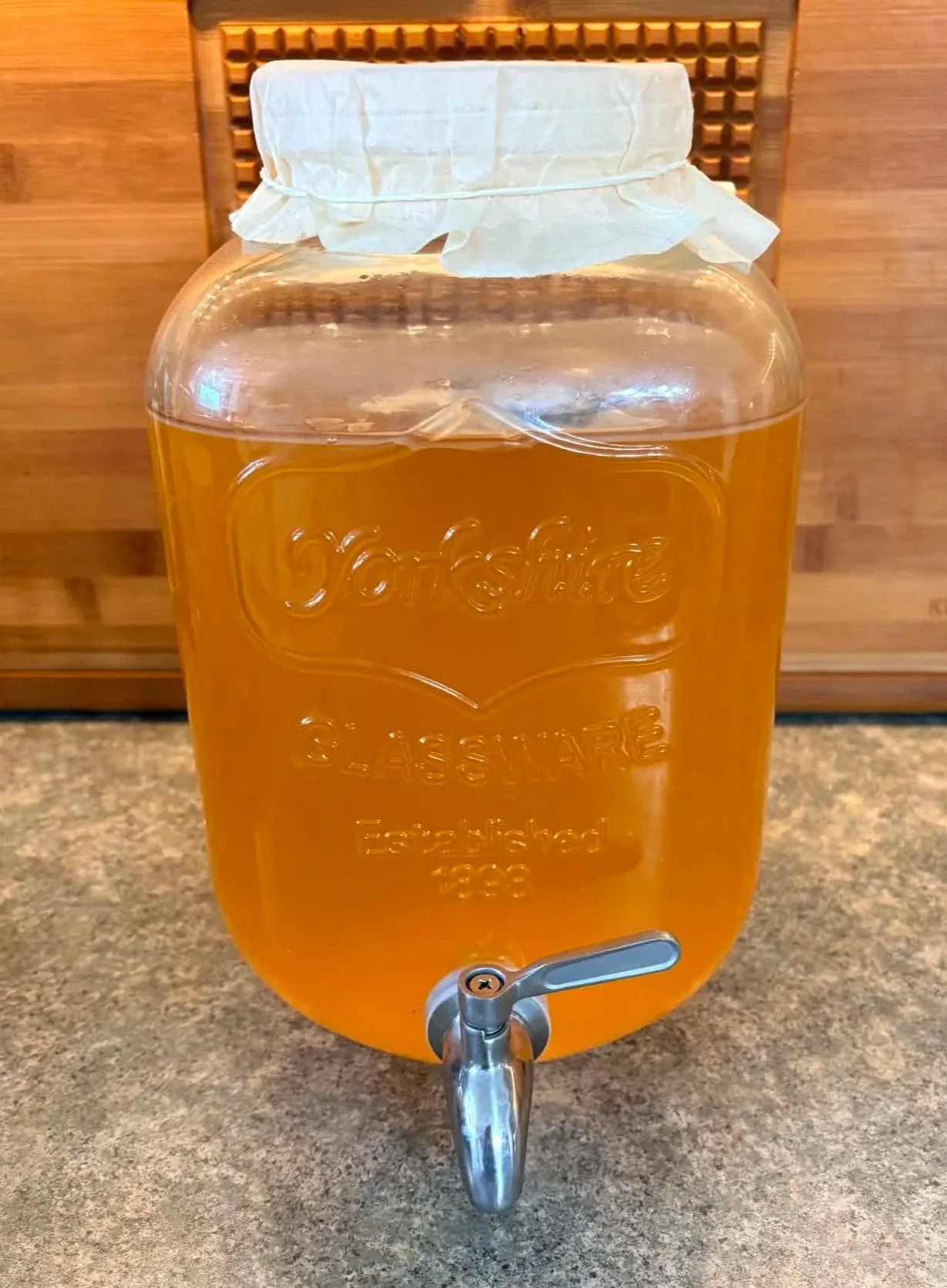
In this post we’re going to walk through the entire process of brewing kombucha only using starter tea or plain unflavored kombucha
I’ll walk you through the process of getting your first batch brewed & how to do a second fermentation where we add flavoring agents while building up fizz
Brewing Kombucha Only Using Starter Tea
This post may contain links but they are not affiliate links. I am not in any sort of affiliate program at this time. They are links to things I actually use. All formulations shared on this blog have been formulated for personal use only, not for resale.
Let’s answer a few questions you might have regarding kombucha. If you have any questions that haven’t been answered leave a comment down below & I will do my best to answer them
What is Kombucha?
Simply put it is an acidic fermented sweet tea. It typically uses a SCOBY but that isn’t a necessary ingredient & we’ll talk about why shortly
It is a probiotic rich beverage that contains strains of beneficial bacteria such as acetic acid bacterias that help convert the alcohol produced in the fermentation process into acetic acid. Acetic acid bacteria may help improve digestion as well as enhance immune function.
It also contains strains of lactic acid bacteria like our familiar friend Lactobacillus, which helps contribute their probiotic properties helping to promote gut health & aid in nutrient absorption
One thing to consider about the probiotics found in kombucha is that they are considered transient. This means they pass through the body instead of populating the gut microbiome.
However, after 3 days of consistent consumption these strains of beneficial bacteria can start making adjustments to our flora
What is a SCOBY?
SCOBY is an acronym that stands for Symbiotic Culture of Bacteria & Yeast.
The SCOBY used to brew kombucha is called a Pellicle or Mother
Keep in mind that all pellicles are SCOBY’s but not all SCOBY’s are pellicles
Our SCOBY or pellicle works as a protective cover for the fermentation helping to control oxygen flow & helping to keep unwanted opportunistic bacteria or unwanted microbes out.
Each time you brew a new batch of kombucha or disturb the brewing vessel a new layer of your SCOBY or pellicle will form
SCOBY’s come in all shapes & sizes. They can be white & smooth, almost feeling plasticy while others are brown or tan in color. It is common to have small dark strings hanging off the bottom, these are harmless yeast strands that can be removed as they may alter the flavor if too much of a buildup of them occurs
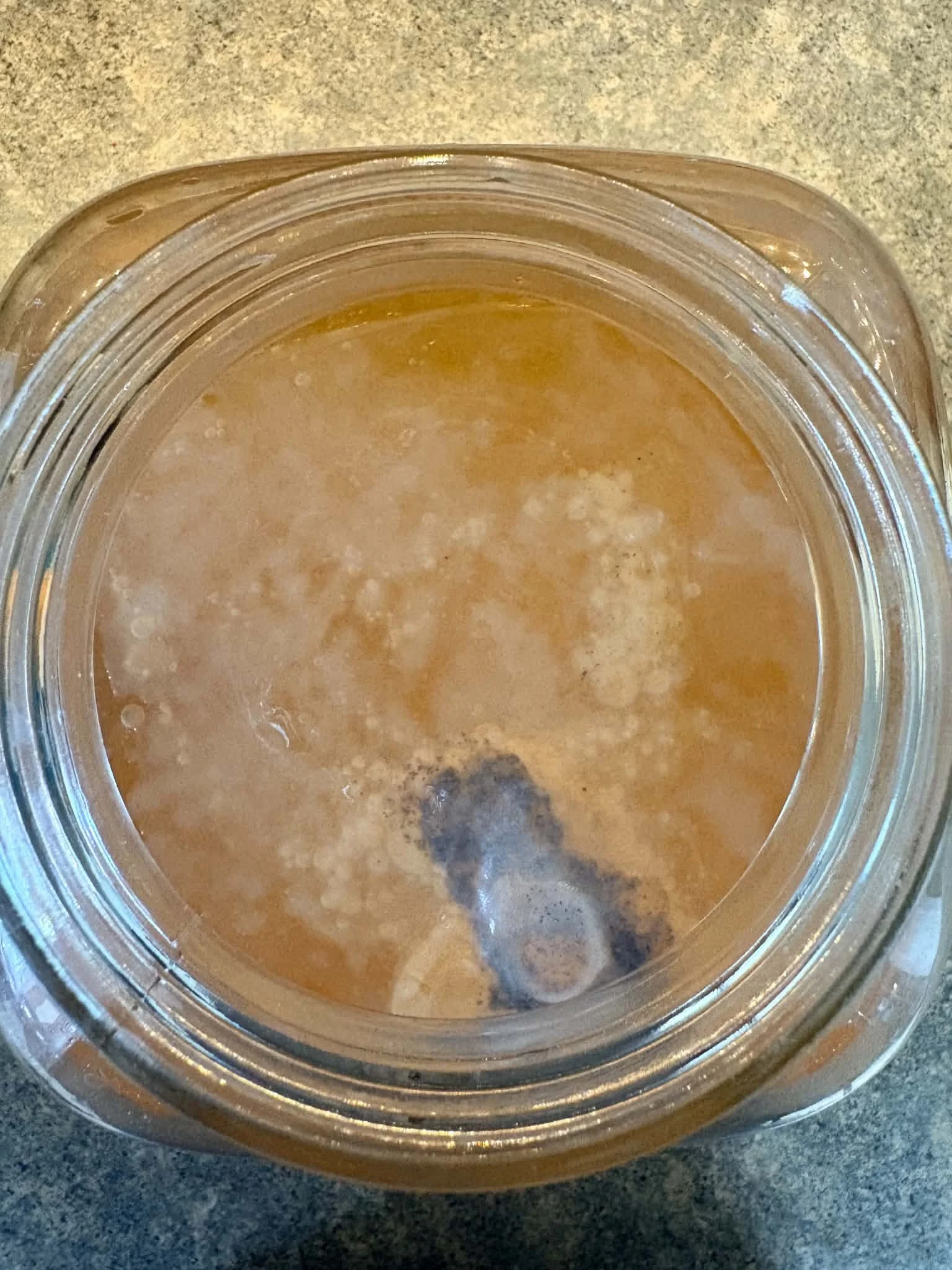
Check out the SCOBY that formed from the batch I brewed on YouTube. See the dark brown patch that contains a bunch of yeast strands? These are completely normal & can be removed from the SCOBY when you use this SCOBY for future brews
While it is not necessary to require a SCOBY for your first brew you will want to keep the SCOBY that forms & use it in your next batch
Possible Health Benefits
The following list is not exhaustive, but it will give you an idea if kombucha is something that can help support your health
May help with certain types of ulcers
Provides a healthy dose of antioxidants & anti-inflammatory benefits
Increased energy
Improved digestion & metabolic function
Supportive to the entire digestive system
Helps stabilize blood sugar
May help with weight loss
Supports healthy liver function
May help with symptoms of constipation, IBS & Crohn’s
Balances pH in the body due to its slight acidity
Strengthens the immune system
Works on the gut brain axis
As we know not everything is for everyone & kombucha is no different
It is best to avoid if you are:
On blood thinning medication
Pregnant or breast feeding
Have fatty liver disease
Have a histamine intolerance
Diabetic
If you fit into any of those categories please talk to your health care team before adding kombucha into your diet
Kombucha can do wonders stabilizing blood sugar & might be quite beneficial to a diabetic but the issue lies in the fact that it does such a good job balancing blood sugar with continual use that you may need less of your diabetic medication.
Types of Tea
While it is possible to brew kombucha using pretty much any type of tea you want, it is recommended we start with tea from the Camellia Sinensis plant. This is the plant that gifts us white tea, green tea, yellow tea, oolong tea, pu’erh tea, black tea & matcha
So while any tea from the Camellia sinensis plant will work I suggest starting with green or black tea which is the general recommendation for those just starting out on their kombucha brewing journey
Green tea:
No oxidation
Light flavor, it’s my preference
Low caffeine
Black tea:
fully oxidized
Higher in caffeine
Strong earthy flavor that can sometimes be hard to cover
standard tea used
Teas to avoid would be herbal teas, flavored teas, decaffeinated teas, teas with added oils such as Earl Gray or Jasmine. While it is possible to use these teas, they are considered advanced brewing ingredients
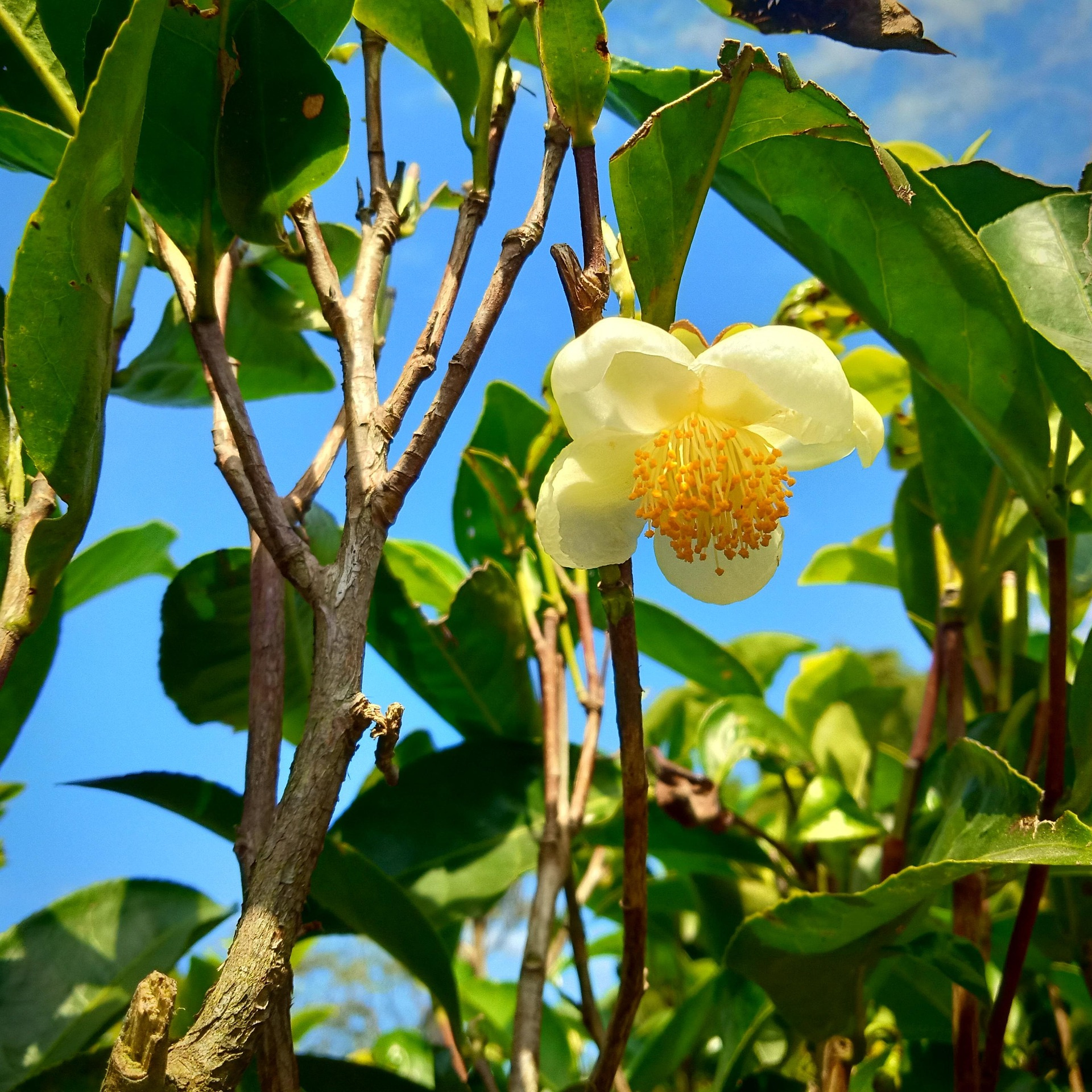
Botanical Name: Camellia Sinensis
Common names: Tea Plant, Tea Shrub, Tea Tree (not to be confused with Melaleuca alternifolia)
Plant family: Theaceae
Parts used: Leaves & buds
Taste: Bitter, Sweet, Pungent
Energetics: Cooling, Drying, Stimulating
Types of Water
The best water to use is either filtered water, spring water or any water that is free of bleach, chlorine & fluoride.
Bleach, chlorine & fluoride are chemicals you do not want in your water for brewing as they might damage the beneficial bacteria we’re relying on to ferment our sweet tea turning it into kombucha
Running your water through a simple Brita or charcoal filter at the very least is better than just using tap water. If that’s not an option you can always leave the water you plan on using out on the counter for 24 hours & some of those chemicals will evaporate out. While that method won’t remove everything it is better than nothing
Types of Sweetener
The best type of sweetener to use is organic unbleached sugar with plain white can sugar coming in at a close second
With that being said the main sweeteners you would want to make sure to completely avoid would be artificial sweeteners (Splenda, Sweet & Low or Equal) as well as Stevia, Xylitol or Monk Fruit. This isn’t because these sweeteners are inherently bad but they just aren’t capable of feeding the beneficial bacteria in our brew
Kombucha brews can be transitioned into using Brown Sugar, Raw Honey, Maple Syrup or Agave but these are considered to be advanced sweeteners so this is not where we start, but it can be a goal to move towards
I know it seems like the amount of sugar required to brew kombucha is a lot, but not all things are as they seem.
Through the fermentation process much of the sugar is actually used as food for the beneficial bacteria & wild yeasts. This process is what helps to create the natural carbonation found in kombucha
While it may be easy to judge the amount of sugar with potentially a desire to use less sugar I’m going to ask you use the full recommended amount
What’s interesting is that after fermentation is complete, for every 8oz glass of kombucha only 4-6 grams of sugar remains. And to make it even more fascinating the remaining sugar has a different glycemic index as white sugar does which is why kombucha is a good beverage for diabetics to consume as it can help regulate blood sugar when consumed consistently
Just for an idea of the sugar content of many of the popular beverages we tend to reach for & in their typical serving sizes:
Cow’s Milk 12 grams of sugar per 8 oz serving
Coconut Water 11-12 grams of sugar 8 oz serving
Soda: 15-39 grams of sugar per 12 oz serving
Orange Juice 20-26 grams of sugar per 8 oz serving
Chocolate Milk 22-26 grams of sugar per 8 oz serving
Apple Juice 24-25 grams of sugar per 8 oz serving
Vitamin Water 32.5 grams of sugar per 20 oz bottle
Energy drinks: 63 grams of sugar per 16 oz serving
Yikes! The 4-6 grams of sugar left in every 8 oz of kombucha doesn’t seem like all that much when compared to drinks we commonly consume
Brewing Kombucha Only Using Starter Tea
Equipment:
Basic Brewing Supplies:
Black or green tea from the Camellia Sinensis plant
Organic unbleached sugar
Filtered water
Storage jar, lead free, ceramic or glass, NO PLASTIC
Strainer
Pot
Cloth or paper towel
Rubber band or string
Mason jar (for second fermentation recipes)
You can find handy kits with all these supplies on Amazon
Advanced Brewing Supplies:
pH strips
Thermometer to stick on the side of the brewing vessel
Hydrometer (to test alcohol levels)
Continuous brewing vessel
Swing top bottles (for second fermentation recipes)
You need to make sure your continuous brewing vessel has a metal or rubber spigot. If you need to switch out a plastic spigot you can find the metal ones on Amazon
First fermentation is the first brew you are creating with your kombucha. Second fermentation is when you flavor your kombucha & build up the carbonation. Swing top bottles work best for building carbonation, but in a pinch a mason jar will work
Ingredients & Instructions:
1 Gallon, Small batch, best for 1 off brews
5-8 tsp Loose Leaf Tea
1 gallon Water
1 cup Sugar
1 cup Starter Tea
Instructions:
Heat 1 quart of water to almost boiling
Add tea to the water & allow to steep for 5-15 minutes
Strain the tea
Add sugar to the hot tea & allow to cool to room temperature
Combine sweet tea, starter tea & the remainder of the gallon of water
Cover with a breathable cloth 0
Ferment for 7-21 days. Taste it after 7 days. The longer you let it ferment the stronger & more sour it will become
As soon as it’s done, set aside 1 cup of starter tea, or use this batch to make a large batch using this gallon as the starter tea portion.
If you are wanting to make a large batch use this entire batch as your starter tea for your next batch. Consider getting a continuous brew set up
2+ Gallon, Big batch, best for continuous brew setups
3-5 TBSP Loose Leaf Tea
2 gallons Water, or more
2 cups Sugar
1 gallon Starter Tea, minimum of 3-5 cups
Instructions:
Heat 1 quart of water to almost boiling
Add tea to the water & allow to steep for 15-20 minutes
Strain the tea
Add sugar to the hot tea & allow to cool to room temperature
Combine sweet tea, starter tea & the remainder of the gallon of water
Cover with a breathable cloth
Ferment for 10-28 days. Taste it after 10 days. The longer you let it ferment the stronger & more sour it will become
If you are using a continuous brew set up you will need to make sure you always leave ⅓ - ½ of the previous batch as your starter tea for the next batch.
Once your kombucha has reached a flavor you like, it is time to enjoy it. You can either drink it as it is or you can add some flavoting & do a second fermentation.
It’s during the second fermentation that the fizz really comes out. Keep in mind the fizz you get from home fermented beverages is a lot lighter than that you get from traditional store bought pop so be sure to manage those expectations
In future posts I will be sharing some different second fermentation recipes but this will at least get you started brewing your first batch of kombucha
Comment down below & let me know what type of tea are you going to use for your batch of kombucha and what second fermentation flavors are you going to try out
Until next time, may you find Peace wherever you are!
Watch the video & tutorial HERE

Image of linked YouTube thumbnail