
Let’s do a second fermentation on our kombucha but this time we’re going to let it over ferment for at least 30 days so it turns into vinegar. You can let it go as long as you want, but I like to start tasting it after 1 month to see if you like the flavor. The longer you let it go the stronger your vinegar will become but depending on the ingredients you choose, temperature of the room the kombucha is fermenting in & health of the beneficial bacteria in the kombucha will all play a part on the length of time this recipe will actually take.
However, conveniently forgetting a bottle of kombucha in the back of the fridge for a few months will give you the same results. It’s really not that serious of a process. As long as there are no signs of spoilage or anyti you can keep allowing it to ferment.
During this process the sugars in the kombucha will eventually be converted into acetic acid, which is the main component in vinegar. This process never stops so that may be something to consider when figuring out how large of a batch to make
While there are methods you can follow to turn your large batch of kombucha into vinegar I prefer to do one off batches like this one
You can use whatever fruit, vegetables or herbs you want, so get creative
Uses for kombucha vinegar could be:
Replacing vinegar in recipes for salad dressing or marinades
A starter culture in fermentation recipes
Swap out all or some ACV in fire cider or fire water with kombucha vinegar
As a natural household cleaner
But really, you can use this kombucha vinegar any way your little heart desires
If you plan on using your kombucha vinegar for a starter culture I’m going to suggest letting it over ferment for at least 2 months to ensure enough of the kombucha has been converted into the acetic acid
If you ever accidently allow things to ferment a bit to long & you accidently make vinegar you could dilute it in a bit of water to still enjoy as a health tonic. Converting our kombucha into vinegar does not lessen any of the probiotics or health benefits that can still help support your gut. It just might be a bit too acidic to drink on its own
Check out the video tutorial HERE
Equipment:
Mason jar with lid
Long handled wooden spoon
Knife
Cutting board
Parchment or wax paper, if you are using a metal lid
Fine mesh strainer
Ingredients:
1 quart of plain, unflavored kombucha that is ready for a second fermentation
½ cup Fruit or Vegetables, chopped
1-3 TBSP Fresh Herbs, chopped
Adjust these amounts to make your desired amount. I find a quart is a good amount to start with & if you really like the flavor you could always move up to a half gallon sized jar.
Instructions:
Roughly chop your desired fruit, vegetables & herbs adding them into a quart sized mason jar
Add your kombucha to the jar, leaving 1 inch headspace
Place your lid on your jar. A plastic lid works best. If you only have a metal lid be sure to place a piece of parchment or wax paper under the lid to ensure the acetic acid doesn’t break down parts of your lid potentially with it falling into your batch
Allow your kombucha to ferment for at least 30 days so it has a chance to be converted into acetic acid. Give it a taste & see if you like the flavor. Allow it to keep fermenting until your desired flavor is reached The longer you let it go, the stronger it will become.
Once it reaches a flavor you like strain out the added ingredients through a fine mesh strainer. If you used dried herbs you may need to strain it through some finely woven cheesecloth
Pour your kombucha vinegar into your desired glass storage container & store your kombucha vinegar out of direct sunlight at room temperature
Shelf life:
Unknown as it can last indefinitely if properly stored. The flavor may change over time become more acidic. If this starts to happen store it in the refrigerator
Notes:
If you are using dried fruit, vegetables or herbs use half the suggested amount to start
Use a mixture of different fruit, vegetables, herbs & seasonings
If you find it is getting to acidic you can always store it in the refrigerator to really slow down fermentation
Make sure you are not using any plastic vessels for this recipe. Fermented things CAN NOT be safely stored in plastic
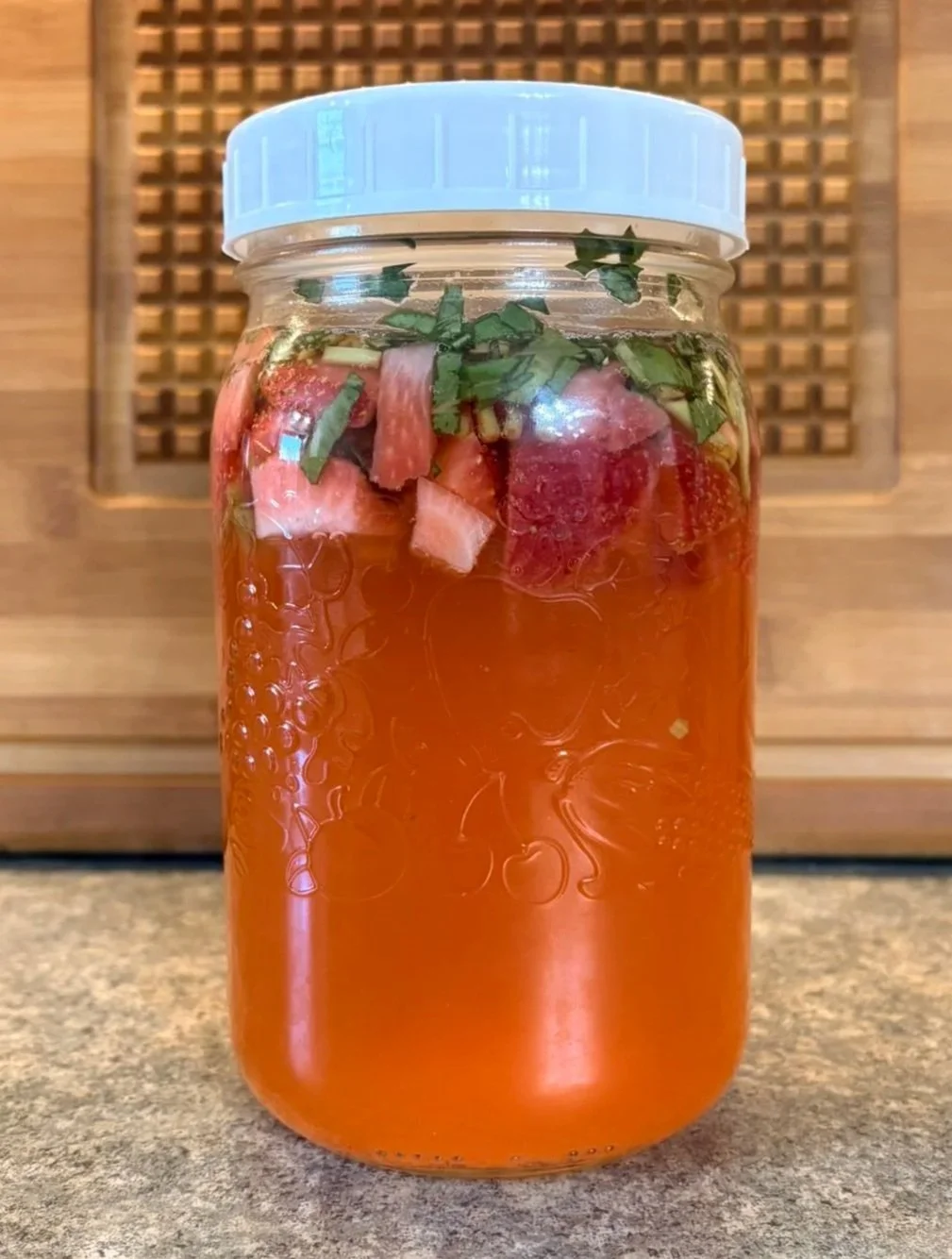
Image of a quart sized jar of kombucha with strawberries & basil that will be converted into vinegar over the next month or so